Saturday, 15 August 2015

MK Calling 2015, MK Gallery (3 July-6 September 2015)


MK Calling 2015 Artists
 
I love that I have a contemporary art gallery in my home town and only have to jump in my car on a Sunday and in less than ten minutes can visit an exhibition space dedicated not only to national and international artists, but also showcases the local artist community.  I shall miss such Sunday excursions when MK Gallery closes at the end of this exhibition for its two year major expansion.  It is perhaps fitting then that this show looks to the local artist community, bringing together around seventy artists from an open call, as the expansion will be benefit not only them, but all who live in and around Milton Keynes and support and enjoy all types of contemporary art.
There were two things I particularly liked about this exhibition.  The first, and I do with all the group shows held at MK Gallery, was that the sheer number of artists included meant that each of its three rooms were filled with much more work than its solo artist exhibitions.  This may, of course, seem like a an obvious (and nonsense) observation to make, but sometimes the sheer size of these three rooms nearly always overwhelm the work on display when by one artist as the curation seems to always lean towards the less is more thinking, which inevitably leaves this viewer wanting to see more.
The second interesting point was that the selection committee had chosen work by amateur artists as well as graduates and established artists, a move rarely made by such committees.  The information text by each piece gave no clues to distinguish amateur from professional, but the inclusion of their dates of birth did, as of course did comparing the individual pieces especially when work of similar genres were hung relatively close together.  I could hazard a guess as to which was which as some naïve style paintings and sculpture looked far less accomplished than others and I really didn’t like them.  It would though, be unkind to name specific artists because (a) people far more qualified than I chose to include them; (b) my view is entirely subjective; and (c) I could be completely wrong in my dismissal of individual artistic talent and achievement against any formal training, especially if any of the artists whose work I did particularly like are indeed amateurs!  I suspect this blurring of lines of judgment was exactly why they were included.
The stand out pieces for me were Cally Shadbolt’s beautiful and serene plaster sculptures Holder (2013), Artemis (2014) and Ornament (2014) and Yannik Perichon’s Two Thousand and Five Bends (2009).  Both artists used materials which engage both the visceral and the cerebral.  The local connection in Perichon’s installation, a collection of hundreds of molten metal and glass fragments from a car that had been set on fire in Furzton Lake, was particularly fascinating.  When examined up close, each tiny piece took on a jewel-like appearance.

Two Thousand and Five Bends (detail), (2012-15), Yannick Perichon
 
My favourites were not combined to sculptural work.  Mary Barnes’ oil paintings and Arianne Wilson’s drawings also drew me to view repeatedly, for very different reasons.  Barnes’ haunting still lives harked back to a style reminiscent of early twentieth century modernist traditions, while Wilson’s cartoon-like and self-reflective drawings continued the post-feminist mantra of the personal being the political.  Both showed total commitment to their practice.
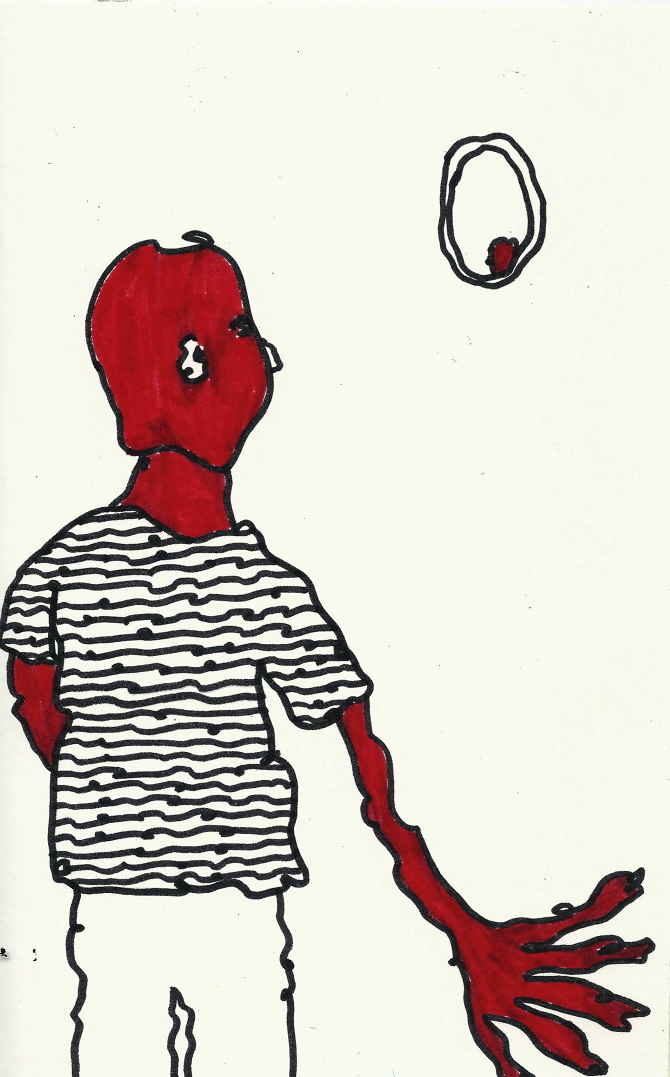
 
   
Self-Discovery, Self-Loathing, Self-Acceptance (2014), Arianne Wilson

Of all the work included in this exhibition, a nearly-missed collection of tiny mixed-media drawings, Compilation (2012-2015) by William Lindley remained in my thoughts for the longest.  It   an exquisite collection of small drawings and print works reflecting Lindley’s overall practice of investigating and reimagining notions of place and described by MK Gallery as combining traditional techniques with contemporary processes.  It is again the combination of the visceral and the cerebral by an artist, which Lindley did so well here and which is always my preferred type of contemporary art.


Compilation [detail] (2012-15), William Lindley


http://www.mkgallery.org/

Friday, 12 June 2015

New Rhythms: Henri Gaudier-Brzeska – Art, Dance and Movement, Kettle’s Yard, Cambridge (17 March-21 June 2015)

 
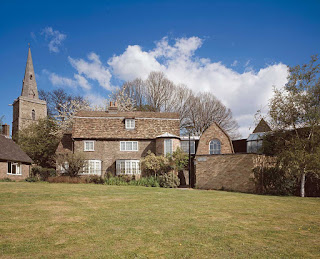
Kettle’s Yard is a delightful venue.  The former home of Helen and Jim Ede, their lifelong love affair with art culminated in 1957 when they bought four derelict cottages in Cambridge in which to display their art collection.  Between 1922-1936 Jim was a curator at Tate Gallery and he believed that art was better approached and appreciated in the intimate surroundings of a home.  Their open house events during their time at Kettle’s Yard attracted students and other visitors during the six years they lived there.  In 1966 the Ides gave their home to Cambridge University who continue to look after it today.

The Ides were very well connected.  When they lived in London in the mid 1920’s, they regularly entertained artists including Barbara Hepworth, Henry Moore and Naum Gabo.  In 1926 Jim Ide bought virtually the entire ouvre of Henri Gaudier-Brzeska and this exhibition, which marks 100 years since the artist died in the First World War aged 23, highlights how his interest in dance and movement was reflected in his work and also that of his contemporaries.
The Dancers (1912), Percy Wyndham Lewis
As well as drawings and sculptures by Gaudier-Brzeska, this relatively small exhibition contains drawings and paintings by a number of British Vorticists, including Percy Wyndham Lewis, David Bomberg and Helen Saunders.  Given that the Vorticist aesthetic of fragmented Cubism and hard edge imagery sought to capture the vibrancy and energy of modern life, on the surface this seems a surprisingly low energy exhibition.  The 2D works are all relatively small and the sculpture mostly hand size.  Despite this and when viewed up close and lingered upon, the energy and exuberance captured in the works begins to permeate the gallery.

Vorticist Composition in Green or Yellow (1915)
Helen Saunders
 
At the beginning of the twentieth century, dance was being revolutionised.  New and daring dance crazes (such as the Apache and of course, the Tango) were sweeping in from Paris and America which became very popular in London music halls and theatres.  Serge Diaghilev was challenging classical ballet and a new modern dance was being formulised by pioneers Louie Fuller and Isadora Duncan.  The artists in the exhibition were swept up in the revolution and sought to capture the energy, freedom and modernism in their work.

While Wyndham Lewis’s The Dancers (1912), Helen Saunders’s Vorticist Composition in Green or Yellow (c. 1915) capture the vitality of dancing figures and their stylised jagged lines instantly evoke the energy of dancing, Gaudier-Brzeska’s drawings and sculptures could as easily be interpreted as wrestlers (who equally fascinated the artist) as much as dancers.  This is evidence is a work such as Red Stone Dancer (1913-1914).  Clearly by its title it is a representation of a dancer and yet its entwined arms over the head could as easily be interpreted as two figures grappling.  His sketch study of the piece, with its use of Cubist/Futurist repeated forms to represent movement, is equally ambivalent.  Despite this, his exquisite handling of the materials is still totally absorbing.

 
Henri Gaudier-Brzeska: (L): Red Stone Dancer (1913-1914) (R): Dancer Study (1914)

Even though Gaudier-Brzeska lived in London for less than four years (between 1911-1914), he very quickly established a reputation as a vanguard artist and is now considered as a pioneer of modern sculpture.  Jim Ede was fortuitous indeed to have bought such a large amount of his work. Kettle’s Yard will close for two years after this exhibition in order to protect the house’s collection during major expansion work on the gallery space.  It is fitting therefore that the final exhibition before its temporary closure is primarily of the artist who is synonymous with both the Ides and Kettle’s Yard.  A visit to the house and the exhibition is highly recommended.

 
 http://www.kettlesyard.co.uk/

Friday, 22 May 2015

Sonia Delaunay, Tate Modern, London (15 April-9 August 2015)


 La Jeune Fille Endormie (1907)
 
 
Prismes Electriques, 1914

Art critic Waldemar Januszczak isn’t a fan of Sonia Delaunay.  In his recent review for The Sunday Times the most positive remark he could make about the artist was her ability to copy the painting styles that surrounded her at any time in order to produce her own decorative (and inferior) versions.  He isn’t convinced by the assertions made by the exhibition’s curator that her work and influence should be revaluated.  He believes that far too much space has been dedicated to a repetitive practice devoid of development, depth, tone or range.  For Januszczak, like many critics before him, Delaunay’s lifetime achievements fade into insignificance when compared to any of her male modernist peers, such as Picasso [of course – yawn].


I suspect that Januszczak  would feel the same about any other female artist who worked at the heady (and much written about) time between the First and Second World Wars, as his criticisms sound remarkably similar to numerous other criticisms of female artists of that time, particularly when (a) these women’s personal lives were interwoven with more well-known and acclaimed male artists, and (b) their practices crossed from fine into decorative art.
 
Throughout the first half of the twentieth century, Sonia Delaunay celebrated the modern world of movement, technology and urban life, exploring new ideas about colour theory together with her husband Robert Delaunay.  In contrast to Januszczak, I will always be excited by a retrospective of a female artist, particularly when it the first time such a collection of their work has been seen in the UK. This one features paintings, textiles and clothes Delaunay made across a sixty-year career.  The exhibition also shows her collaborations with poets, choreographers and manufacturers, from Diaghilev to Liberty.  In my opinion, Delaunay’s artistic story deserves to be told and the totality of her practice deserves however much space is needed to hold it.  In fact, it is her crossover into fashion and design and the critical responses such crossover have elicited within art history narratives, which continue to fascinate and infuriate me in equal measure.
 Le Bal Bullier (1913) 

Paintings such as Le Bal Bullier (inspired by Delaunay’s experience of the tango being danced at a
Parisian nightclub) and Electric Prisms (which explored the effect of electric light) show the artist at the height of her engagement with painting.  The results of her engagement in geometric abstraction away from canvas and into fabric design epitomised the fashion of the 1920s.  This transition from painting to design can been seen in a work such as Simultaneous Dresses, which shows a lighter, sketchier style.  Delaunay’s success as a fabric designer took over her entire practice for many years, but her work did develop when she did return to painting.  Januszczak is wrong to say that it did not.  In 1937 Delaunay produced three massive panels depicting an aircraft propeller, engine and instrument panel for the International Exhibition of Arts and Technology. She was fifty-two when she created this work, which was awarded a Gold Medal by the exhibition judges at the time and actually seem very contemporary even today.
  
Propeller (1937)

In the battle of the sexes within modernist art criticism, Delaunay has suffered the same fate as Marie Laurencin – she has been judged and found lacking by many.  For an insight into the arguments attempting to redress this view, in the same way as this exhibition, chapter 4 “Gender Codes” in Cubism and Culture by Mark Antliff and Patricia Leighton (Thames & Hudson, London 2001) is a fascinating and informative read.


Saturday, 11 April 2015

Ellen Altfest, MK Gallery, Milton Keynes (3 April-21 June 2015)


Torso (2011)

MK Gallery rarely holds figurative painting exhibitions, so lovers of oil on canvas and realism are in for a real treat with its latest exhibition.  Ellen Altfest (born New York, 1970) is an incredibly gifted painter and looking at her twenty-t wo paintings featured in this, her first solo exhibition in a UK public gallery (a curatorial practice which MK Gallery seems to be basing many of its exhibitions on), it is reassuring to see that such talent and meticulous precision in painting can still successfully manifest itself in a contemporary way.  You can at once see the influence of Lucien Freud and Stanley Spencer on Altfest’s work and an aura of detached, yet relentless observation pervade the four galleries.
Given that Altfest always paints to actual size, her early canvases of woodland trees and rocks painted plein-air offer a glimpse into the artist’s enormous capabilities and commitment.  Each fluttering leaf, twisted branch or gnarled bark is consummately rendered and offers a visual feast whether observed from a distance or at close quarters.  The woodland seems to move as you view at different angles.

The Tree (2000)
 
As her practice developed, Altfest began to bring the outdoors inside, juxtaposing natural objects such as logs, gourds and tumbleweed against the paint-splattered floorboards of her New York studio.  I stood dumbfounded at the intricacy of Tumbleweed (2005).  The delicacy and intricacy of the brush strokes make an ugly subject truly beautiful.  Gourds (2006-2007) similarly turned a domestic vegetable into an object of exquisite beauty, bringing the tradition of seventeenth century Dutch still life painting into the twenty-first century.

 
Tumbleweed (2005)
 
Gourds (2006-2007)

Altfest is best known for her small and detailed paintings of male body parts.  Hairy hands, armpits and arses are given as much artistic care and attention as the rest of her ouvre, but it is with the depiction of human flesh in which the artist truly excels.  Every blemish, wrinkle and vein can be clearly seen.  She wields her brush so masterly that in a piece such as Armpit (2011) you can feel the veins pulsating and in Three Parts (2014-15) the woven cloth appears to gently sway as you walk pass the canvas.

The Hand (2011)
 
It is almost impossible to put into words the experience of looking at Altfest’s work.  Her paintings capture nuances in light, texture and tone so skilfully and so beautiful, viewing her work is almost a mystical experience.  I was not expecting to be moved quite as much as I was and made repeated laps around the galleries as I couldn’t quite believe the level of artistry on display.  It reminded me of the first time I saw Jenny Saville’s paintings – truly electrifying.  Experiencing Altfest’s work is one that really should not be missed.
Armpit (2011)

Friday, 20 February 2015

Love is Enough: William Morris and Andy Warhol, Modern Art, Oxford (6 December 2014-8 March 2015)

 
William Morris and Andy Warhol are two artists whose seemingly disparate aesthetics and artistic motivations do not readily draw comparisons, yet Turner Prize-winning artist Jeremy Deller has sought to do exactly that in this very curious exhibition.  My first impression of the show was that it had the appearance of a visual manifestation of an art history dissertation – a clever set of propositions, expertly researched and argued but ultimately with which you do not have to agree.  Discovering that Deller has an MA in art history came as no great surprise.  That Warhol and Morris are two of Deller’s artistic heroes, even less so.
The usual white box galleries of Modern Art, Oxford have been bedecked with Morris wallpaper and assaults the eye upon entering.  Within these darkened walls, Deller firstly purports that parallels can be drawn between Morris’s love of mythology (particularly tales of King Arthur and Camelot) with Warhol’s obsession with celebrity.  To illustrate this the exhibition displayed the monumental The Attainment: The Vision of the Holy Grail to Sir Galahad, Sir Bors and Sir Percival by Morris, Edward Burne-Jones and John Henry Dearle (1898-1896) opposite Warhol’s Marilyn Tapestry (1968) and Portrait: the Emergence of John F Kennedy (1961). 

 
The Attainment: The Vision of the Holy Grail to Sir Galahad, Sir Bors and Sir Percival, William Morris, Edward Burne-Jones and John Henry Dearle (1898-1896)
 
Marilyn, Andy Warhol (1963)
 
Similar pairings continue throughout the exhibition to illustrate Deller’s hypotheses.  He proposes that Warhol should be seen as a serious politically motivated artist and places, among others, Warhol’s prints of Mao (1973) over a vitrine containing Morris’s political pamphlets and writings.  Deller finally suggests that connections can be drawn between the two artists’ working practices and collaborations with other artists of their time, particularly with their printmaking activities.  He argues that comparisons can be drawn to Warhol’s activities at the Factory and the foundation of Morris & Co.  For me, this is where Deller’s argument completely fails.  Comparing a converted warehouse in New York used for predominately art-house happenings with a furnishings and decorative arts manufacturer and retailer, is just too tenuous. 
Morris & Co Workshops, London (c.1880s)
 
The Factory, New York (c. 1960s)
 
Overall, despite various visual links and assault, Deller’s comparisons of Morris and Warhol never really get off the ground.  Yes, they both believed in collaboration, both drew flowers, both can be linked to the theme of Camelot and both wrote prodigiously.  Sadly, none of these parallels really manage to convince.  Its swan song is comparing Morris’s floral designs for various wallpapers and soft furnishings with some Warhol screen prints which featured flowers in them, which only highlights further (if this were needed) at the huge gap in the skills level possessed between the two artists.
L:  Acanthus wallpaper design, Williams Morris(1879-1881) 
R:  Head with Flowers, Andy Warhol (1958)
 
L:  Hand Holding Glass with Daffodil, Andy Warhol (1957) 
R:  Kennet design for wallpaper, William Morris (1883)
 
Where this exhibition does succeed though is in bringing out from public and private collections works which have rarely been seen in the United Kingdom.  But it is works by Morris, such as the glass panel The Story of Tristram and Isoude, Panel 13, King Arthur and Sir Lancelot (1862) and Kennet, a design for wallpaper (1883).
 
The Story of Tristram and Isoude, Panel 13, King Arthur and Sir Lancelot, William Morris (1862)
 
Jeremy Deller met Andy Warhol in 1986.  After an initial meeting at the artist’s room at The Ritz in New York, Warhol invited him to spend the summer at the Factory.  This led to a lifelong admiration of the artist and his work by Deller.  Apparently he grew up in a home filled with reproduction Morris wallpaper and soft furnishings which left an indelible imprint in the artist’s subconscious,  With Love Is Enough, Deller has been given the very enviable opportunity of putting on an exhibition featuring his art heroes.  I can only dream of the day when the exhibition "Dangerously Beautiful: Helen Chadwick and Meret Oppenheim" makes it out of my head and into a public gallery space.

Saturday, 14 February 2015

Why I Love… A series of posts on artworks which have made a lasting impression on me. No 1: "Les Demoiselles d’Avignon" by Pablo Picasso (1907).


Les Demoiselles d'Avignon, Pablo Picasso (1907)

I first became aware of this very well-known painting, famed to have given birth to Cubism and the rise of modern art, around 1995 when I was enrolled on an evening introduction to art history course at Birkbeck University in London.  I wasn’t, and am still not, a huge fan of Picasso.  Back in 1995 after reading a very heavy and theoretically dense academic text about Demoiselles, I didn’t really understand much more about the painting other than a few key facts.
 
Five years after my initial introduction to Demoiselles, during a visit to New York I was very lucky it see it in Museum of Modern Art and was completely mesmerised.  It is a huge painting, around 2.5m x 2.5m, full of bold colours and sweeping, confident and savage brushstrokes.  Sitting in front of such a wonderful painting my imagination was easily transported back to turn of the twentieth century Paris, while still seeming wonderfully contemporary.  No wonder it caused such a scandal when it was originally painted.

Serendipity drew be back into the painting’s orbit once more during a first trip to Paris where unbeknown when booking, the hotel I was staying at, the Timhotel Montmarte in rue Ravignon, was actually right next to the studio, known as Le Bateau Lavoir, where the painting was created and where Picasso had lived and worked between 1904-1911.  Redeveloped into private apartments many years previously, an illustration of Demoiselles featured in the poster on display in the window of the former studios.  It gave a brief history of the site to the numerous art students and lovers passing by and paying homage.
 
 
rue Ravignon, Paris - site of Le Bateau Lavoir

Many more years passed by before my attention was once more and unexpectedly drawn back to Demoiselles during research on the French painter Marie Laurencin.  Her story and work presented a fascinating case study on how women artists have been written into art history narratives, which was the overall focus of my MA research.  During my research, I discovered Picasso had associated one of the prostitutes featured in Demoiselles as Laurencin.
 
Marie Laurencin and Pablo Picasso, c. 1907
 
Below are some extracts from my final dissertation “Ungilding the Lily:  A Reappraisal of Marie Laurencin’s use of Self-Representation and Figurative Abstraction between 1904 and 1924”.

Laurencin was also the only female artist to play an active role in the group of artists and intellectuals surrounding Picasso and the Bateau Lavoir in Montmartre, where the principles of Cubism were formed.  Despite working within this highly macho and phallocentric group, Laurencin developed her own individual artistic language during this period.  The majority of writing on Marie Laurencin’s involvement in the cubism movement between 1907 and 1914 primarily focus on her relationships with Picasso and Guillaume Apollinaire as well as her failure to adopt Cubist aesthetics in her work.  Her inclusion in accounts of the major personalities of that time has been reduced to her being portrayed as the passive (and sometimes abused) muse of Apollinaire, a joke to Picasso who barely tolerated her and as a bourgeois hanger-on.  She has also been accused of deliberately promoting a ‘feminine’ painting style so that she did not have to compete with her male contemporaries.  After her return from exile in Spain during the First World War, she went on to enjoy commercial success and celebrity as a society portrait painter before falling out of fashion from the late 1930s.  Since her death in 1956, her work has been seen as superficial and largely derivative. 

Peter Daix is one of the many historians who have suggested that Les Demoiselles d’Avignon was Picasso’s desire to outstrip his rival Matisse and that the aggressiveness of the final version was as a result of him seeing Le Bonheur de Vivre [The Joy of Living], 1905.[1]  Picasso set out to destroy Matisse’s image of an Arcadian pastoral bliss by replacing it with a nightmare vision of sexual subversion, prostitution and primitive menace, influenced by the collection of African and Iberian figurines and masks which he had recently acquired.  Fagan-King has further purported that the original brothel scene arose from Picasso reading Apollinaire’s pornographic stories around that time which included a ‘Laurencine personage’ in a brothel description where the character “opens her legs like the pages of a book”.[2]  This description would locate Laurencin as the figure in the lower right hand side of Picasso’s composition and the face which bears the brunt of his most extreme fragmentation and primitisation.  An added ‘incentive’ by Picasso to place her there may have also been provided by some unsavoury talk between him and his close friend writer Henri-Pierre Roché as alluded to by Richardson (1996).[3]  In fact, all of Richardson’s accounts of Laurencin’s involvement with Picasso are extremely salacious and he seems to have included her purely in order to reveal her numerous and varied sexual proclivities,[4] in effect reducing her to the most corrupt femme-fatale behind her mask of respectability.[5]  Additionally, while there is no direct evidence to support this, something far more offensive may be happening in Les Demoiselles d’Avignon.  Given that Picasso would have been well aware of Laurencin’s mixed-race heritage,[6] assaulting her race as well as her gender, makes his ‘joke’ doubly unpalatable. 

Elliott and Fagan-King have both contended that Les Jeunes Filles [The Young Girls], 1910-11, is evidence that Laurencin was familiar with Picasso’s painting (which was not exhibited publically until 1916) and acted as the artist’s retort.  Upon first appearance it would seem a weak and futile one in comparison to Picasso’s crude and violent humour.  Stylistically, its restricted colour palette and composition mimics Les Demoiselles D’Avignon, as does the cubist handling of the background.  However, the fact that the cubist elements have been relegated to the background landscape and also limited to representing assorted objects of basket, fan and pitcher, while the abstraction of the women in the foreground is pure Laurencin suggests that these young girls (who all bear the artist’s developed facial logo) provide an antidote to the savagery, violence and sexual display of Picasso’s women with their graceful, curvilinear and clothed bodies.  Laurencin’s blague, therefore, is to refuse to submit her body/their bodies to any distortion and dissection.  In doing to, the artist rescues them from the brothel and celebrates, rather than denigrates, their womanhood.  In effect, Laurencin renders Picasso’s ‘joke’ impotent by insulting the virility and creativity of the Catalan bull”.         

Les Jeunes Filles, Marie Laurencin (1910-1911)

Les Demoiselles d’Avignon was there at my very first foray into art history.  It lingered in my imagination over the years, where scenes of a bohemian Parisian life in the early 1900’s, featured regularly in my day dreams.  It also featured in the conclusion of my academic undertakings and therefore deserves its number one position in this ‘Why I Love’ series.


[1] Daix, P. and Rosselet, J. (eds).  (1979).  Picasso: The Cubist Years, 1907-1916. A Catalogue Raisonnée of the Paintings and Related Works.  London: Thames and Hudson, p11.
[2] Fagan-King, J. (1988). United on the Threshold of the Twentieth-Century Mystical Ideal: Marie Laurencin’s Integral Involvement with Guillaume Apollinaire and the Inmates of the Bateau Lavoir.  Art History, Vol. 2, No 1, p103.
[3] Roché , H-P. (1906) as cited in Richardson, J.  (1996).  A Life of Picasso, Volume II: 1907-1917.  London: Jonathan Cape, p63:  It seems likely (although there does not appear to be any material which directly links these two facts) that Roché, who was also Laurencin’s first lover shared with Picasso stories of Laurencin’s sexual activities which were contained in his diaries and which alleged that at the time she was with Roché, Laurencin also enjoyed the attention of three lovers (sometimes at the same time), but that he had extracted himself from the relationship because of her “shameless squatting on the bidet in front of them both like a man”, which disgusted him.
[4] Richardson, J.  (1996).  A Life of Picasso, Volume II: 1907-1917.  London: Jonathan Cape, pp 61-67.
[5] Ibid: Richardson’s only reference to Laurencin’s work is again to the two paintings in which Picasso is featured, describing Une Réunion à la Campagne as a “curious apotheosis,” before begrudgingly admitting that: “For all her precocity, Laurencin deserves more recognition than posterity usually records her for her early work”.
[6] As mentioned earlier, Laurencin had creole ancestry and such heritage can clearly be seen in photographs of the artist and her mother from around this time.

Saturday, 7 February 2015

How to Construct a Time Machine, MK Gallery, Milton Keynes (23 January-22 March 2015)

We Could Have Been Anything That We Wanted To Be (2011) Ruth Ewan

A New Year and a resolution to re-establish more regular posts to Laughing Torso.  Last summer was sadly consumed with caring for my ailing ninety-nine year old grandmother who passed away in July after a very slow and sad decline.  

The first exhibition of 2015 at MK Gallery has thankfully got the resolution off to a great start.  Located in my home town (or City, depending on your loyalties), I am very spoilt to have this wonderful gallery on my door step and must confess that during the five years I have lived in Milton Keynes have, due to being limited to weekends for gallery visiting, mostly overlooked it in favour of visiting London exhibitions.  Shameful, especially as this summer the gallery will close for two years due to an exciting multi-million pound expansion!  So I have resolved to reconnect with MK Gallery much more proactively – now and after its redevelopment.

Time and Relative Dimensions in Space (2001) Mark Wallinger
 
I attended the exhibition on its preview night when its curator, Dr Marquard Smith held an ‘in conversation’ talk along with two artists featured in the exhibition, Mark Wallinger and Ruth Ewan.  I love events like these - they always give real insights into an exhibition as only the curator him/herself can and I love listening to people discussing art articulately and with passion and conviction.  How to Construct a Time Machine features work by artists interested in notions of time and how art can be used as a machine or device for exploring how time is perceived, presented and manipulated.

 
The Time Machine in Alphabetical Order (2010) Thomson & Craighead

Perhaps unsurprisingly, film features heavily within the exhibition as it is media which lends itself well to the manipulation of time.  Thomson & Craighead’s film “The Time Machine in Alphabetical Order” (2010) a re-presentation of the cult 1960 film re-edited into alphabetical order, Elizabeth Price’s “Sleep” (2014) and Tehching Hsieh’s “One Year Performance 1980-81”, where he freeze frame recorded himself punching a worker’s time clock every hour on the hour, were stand out pieces.  Alongside these, Marquard’s placing of historical works such as Georges Méliès’ “A Trip to the Moon” (1902) and John Cage’s “4’33” (1952) cleverly demonstrated the fascination time has had on artists and filmmakers for many years.


One Year Performance 1980-81, Tehching Hsieh
Among the film work, sculptural pieces ranging from Mark Wallinger’s massive “Time and Relative Dimensions in Space” (2001) - a full scale aluminium version of Dr Who’s tardis, to the 20cm diameter “100 Years” (2004) from Kris Martin - a small brass sphere set to explode in 2104, added contrast.  The mechanics of the projectors and audios from the films, along with the kinetics from Mat Collishaw’s “Magic Lantern Small” (2010) make this a very noisy exhibition.  It also fell foul to technical issues on both my visits.  On the preview night, “Sleep” had no audio and on my second visit Catherine Yass’s “Safety Last” (2011), a manipulation of the iconic clip of Harold Lloyd clinging onto a clock on the front of a skyscraper from his 1923 film, wasn’t working and Katie Paterson’s “Field of Sky (91.800g)” (2014), a found meteorite, cast melted and re-cast into a new version, was missing completely.  This was a real shame and let down Marquard’s curatorial vision.  Despite this, however, How to Construct a Time Machine is a strong and sophisticatedly curated and deserves more than one visit to fully appreciate all the subtleties of the works on display as well as their interactions with each other.